Charging Lockers vs Power Bank Rental vs Cable Stations: Which Fits Your Venue?
JB Charging Team

Charging lockers vs power bank rental comes down to one question: where should the guest's phone be while it charges? If it should be put away, as with swimmers at a water park, members mid-workout or a phone-free show, use a locker. If guests sit within cord reach of an outlet for their whole visit, cables are enough. If they stand, move around or might leave before the phone is full, a rental power bank is the only one of the three that keeps the phone in their hand.
One festival guest at 6%: locker, cable or rental bank
Say you run a weekend festival. It's 9:10pm, 20 minutes before the headliner, and a guest is at 6%. Her ticket, her drink payments and the pin she dropped for her friends are all on that phone.
With a charging locker by the gate, she leaves the phone in door 14 and watches the headliner without it: no video, no way to find her group. When the set ends, she joins the pickup line with everyone else who had the same idea, while her ride circles the lot.
With a cable tent, she stands at a charging bar for 25 minutes and hears the opening songs from the tent.
With a rental power bank, she taps her card, a charged bank slides out with its cables attached, and she's back at the stage in a minute with the phone in her pocket. On the way out she drops the bank in a free slot at the gate, and billing stops. Nobody on your staff touched anything.
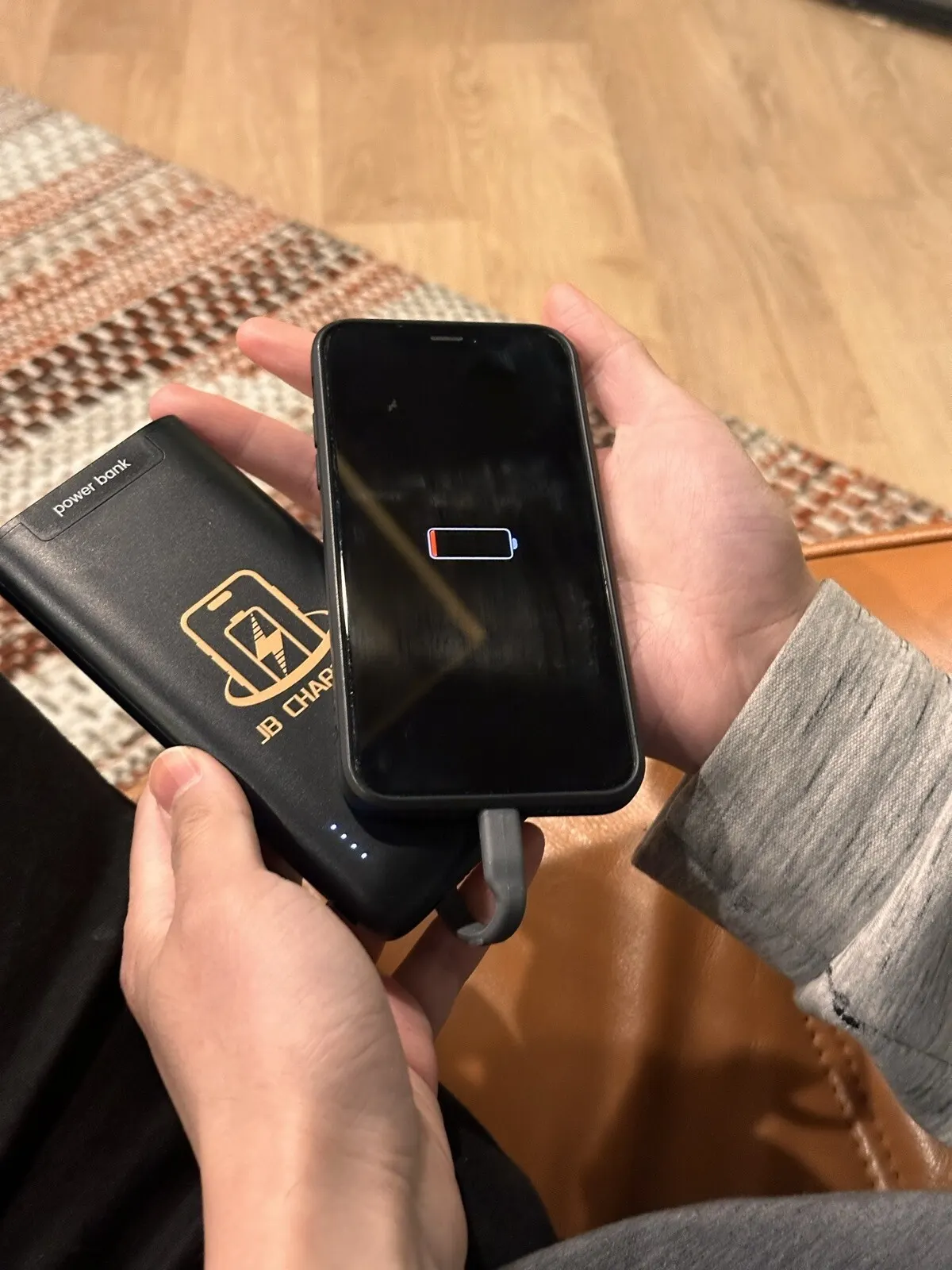
Charging lockers vs power bank rental vs cable stations, side by side
| Charging locker | Cable station | Power bank rental | |
|---|---|---|---|
| Guest keeps the phone? | No | Yes, within cord reach | Yes, anywhere in the venue |
| What the guest pays | Usually nothing; some lockers charge per use | Nothing | Per rental, by default $3 per 30 minutes with a $20 daily max; the operator sets pricing per station |
| Capacity | One phone per door, until the owner comes back | One phone per cable, for as long as someone sits there | One phone per bank, until the renter brings it back |
| Staff work | Forgotten codes, stuck doors, the pickup rush at close, phones left behind | Frayed or missing cables; "can I borrow a charger?" | Next to none: guests rent and return on their own, and a local operator restocks and services it |
| Who answers guests' questions | Your staff | Your staff | JB Charging, through the machine, the app or the receipt |
| If something goes missing | It's a guest's phone, in your care | Cables walk off; phones get left plugged in, unattended | It's the bank, and the renter pays, not the venue |
| Cost to the venue | Usually bought or leased; if you own it and it's free to guests, the cost is yours | Low to start, then replacement cables | Nothing to host under our standard terms, beyond electricity; or buy stations outright |
| Space | A cabinet sized by its door count | Wall or table space next to seats and outlets | J8 Pro: about 9 x 9 in on a counter or optional stand, 8 banks. J24 Pro tower: about 14 x 18 in of floor, 24 banks |
Capacity. A locker door stays occupied until the owner comes back, not until the phone is charged. Say a 12-door locker's guests leave their phones for 2 hours: it serves 6 people an hour, however fast it charges. And at closing, or when a set ends, every owner wants a phone back at once.
A bank is out only until it's returned, and a renter paying for time has a reason to bring it back once the phone is charged. Returned banks recharge in the slot before going back out, so a station's real limit is how many charged banks are waiting. When every bank is out, the next guest waits too, so size the station to the room: a countertop J8 for a bar, a 24-bank tower for a mall concourse.
Connectors. Apple switched the iPhone to USB-C with the iPhone 15 in September 2023, while the iPhone 5 through 14 use Lightning, so your guests carry both. Every cable spot and locker door needs both connectors, and loose cords are the parts that fray and disappear. Every JB power bank has Lightning and USB-C cables built in.
If something goes missing. With a locker it's a guest's phone, and the complaint comes to you. With a rental it's the bank, not the phone, and on a hosted station the bank belongs to the local operator. By default, a renter who keeps one past 24 hours pays a $40 non-return fee (both set per station), and the venue is never charged.
Cost. Lockers and cable stations are usually bought or leased. Some are sponsor-funded or charge guests per use, but if you buy one and charging is free to guests, the cost is yours. Under our standard terms, a JB station costs the venue nothing to host beyond electricity. The local operator owns it, and all terms, including any rental share (paid monthly by direct deposit), are agreed in writing before install.
That's the real trade: lockers and cables are usually free to guests and cost you, while a rental costs the guest instead. Guests pay because they keep the phone. If you'd rather own the stations, host, buy or rent compares the options.
Term and exit. Our standard agreement runs 6 months, then month to month on 30 days' notice, and the station is removed at no cost to you. It asks you not to host a competing charger during the term, so if you'll keep lockers, outlets or front-desk cables in another zone, have the agreement say so. Operators may propose different terms, and what you sign is what counts. What to check before signing covers the rest.
Safety and insurance. The station plugs straight into a wall outlet, with no extension cord, and stays out of exit paths. The banks charge in their slots and carry FCC, CE and RoHS marks. JB Charging carries $2 million per occurrence in general liability and can name your venue as an additional insured on request.
When a charging locker is the right call
Lockers fit where the phone is supposed to be put away:
- Water parks and lap pools. Swimmers are storing their things anyway, and phones and water don't mix. (A pool deck where guests lounge for hours is the opposite case: there the phone stays out.)
- Gyms and studios, for members who'd rather leave the phone during a class.
- Phone-free shows. If the house rule puts phones away, a locker at the door can hold them (some shows use sealed pouches instead). Plan for the exit, though: the phone comes back out for the ride home, which is where a rental station at coat check earns its spot.
- Trampoline parks, for the jumpers' phones, though not the parents'.
If you go with lockers, settle these six things before you buy:
- What it costs per door to buy or lease, who replaces worn cables, and what service costs after year one.
- Who opens a door when a guest forgets the code, and what proof of ownership do they ask for?
- What happens at closing: how a dozen guests get their phones back at once, and where unclaimed phones go, who logs them and how long you hold them.
- Can staff see the locker from where they normally stand? A cabinet of phones nobody watches invites trouble.
- Do the doors fit a large phone in a thick case?
- Who handles "my phone came out scratched" or "it never charged"? With a locker, that complaint is yours.
When cables are enough
Cables work when all three of these are true: guests sit down, they stay put for the whole wait, and their seats are within cord reach of an outlet. Think of a dealership lounge with counter seats along the wall, a library desk with an outlet at every seat, or a hotel nightstand.
Once any of those stops being true, cables stop working. A salon client spends an hour in a chair across the room. A service customer gets called up to the desk. One guest sits by the wall all evening and nobody else gets the cable.
Hospital waiting rooms are the clearest case. People sit for hours, so they look like cable territory, but families get called to the bedside, step out to the cafeteria or walk to the garage, and a waiting-room cable ties them to the room at exactly the wrong moment.
If a guest asks if your USB ports are safe to plug into (the "juice jacking" question), is it safe to rent a power bank? covers what's actually known.
When rental power banks win
Rental banks fit anywhere guests stand, move around or might be called away: bars, clubs, malls, casinos, ballparks, festivals and hospital waiting rooms. When the guest has to get up and go, to the gate, the bedside or the ride home, the phone goes too.

For a plain-English explainer you can hand to staff, see how power bank rental works.
Decision table: which charging fits your venue
Decide zone by zone, not venue by venue. Some venues are best served by two formats: lockers for jumpers and a station by the parents' seats, or outlets at library desks and a station in the student union.
| Venue | Where the guest's phone needs to be | Best fit | Venue page |
|---|---|---|---|
| Bar, pub, late-night restaurant | In hand: tab, photos, ride home | Power bank rental | Bars and restaurants |
| Coffee shop, lunch counter | A short visit, or a seat by an outlet | Usually none of the three; outlets at the seats cover the occasional ask | |
| Nightclub, lounge | On the dance floor, then on the ride home | Power bank rental at coat check or the restroom hallway | Nightclubs |
| Phone-free show or dance floor | Away during the show, back out at the exit | Pouches or lockers at the door; power bank rental at coat check or the exit for the ride home | |
| Hotel, resort | Leaving the lobby: checkout, pool deck, airport | Power bank rental at the front desk; cables in rooms | Hotels |
| Casino | On the gaming floor, away from outlets | Power bank rental | Casinos |
| Hospital waiting room | With a family member who may be called back at any moment | Power bank rental; cables only for seats along a wall | Hospitals |
| Mall, outlet, food hall | Store to store: payments, parking, finding family | Power bank rental, with towers at entrances and food courts | Malls |
| Trampoline park, bowling, arcade | Jumpers: put away. Parents: in hand for hours | Lockers or cubbies for jumpers; power bank rental for parents | Family entertainment |
| Stadium, ballpark, tournament complex | In the stands: tickets, streaming the game | Power bank rental | Stadiums and sports complexes |
| Festival, fair, race | Everywhere: tickets, payments, finding friends | Power bank rental | Festivals and events |
| Convention center, trade show | Walking the floor: badges, event apps, lead scanning | Power bank rental near registration | Convention centers |
| College campus | At a desk for hours, or on the move between buildings | Cables at study desks; power bank rental in unions and dining halls | Colleges |
| Dealership lounge, salon, laundromat | Seated and waiting, but often called away or across the room | Cables if seats line the wall; power bank rental otherwise | Waiting areas |
| Gym, lap pool, water park (swimmers) | Put away while they swim or train | Charging locker |
Next step
Find your venue in the table above and open its page. Running an event? Start with phone charging for festivals, fairs and events.
Frequently Asked Questions
Is a charging locker or a power bank rental better for a bar?
For most bars, a power bank rental. Bar guests need the phone in hand for the tab, photos and the ride home, and a locker takes it away for exactly that stretch of the night. Guests tap, take a bank and return it on their own, so staff stay out of it.
Will guests pay to rent a power bank when lockers and cables are free?
Some won't, and that's the trade. By default a rental costs $3 per 30 minutes with a $20 daily maximum, and the operator sets pricing per station, including an optional free first period of up to an hour. The guests who rent are the ones who need the phone in hand, for a ticket, a payment or the ride home. A guest who can sit by a wall for half an hour can still use a cable.
What happens if a guest walks off with a rented power bank?
The renter pays, not the venue. By default, a renter who keeps a bank past 24 hours is charged a $40 non-return fee, and the operator sets both the window and the fee per station.
Does a power bank rental station cost the venue anything?
Under JB Charging's standard hosting terms, a station costs the venue nothing beyond the electricity from a standard outlet. A local operator owns, stocks and services it, and all terms, including any rental share, are agreed in writing before install. Venues can also buy stations outright if they'd rather own them.
Is a power bank rental station insured?
JB Charging carries $2 million per occurrence in general liability and can name your venue as an additional insured on request. The station plugs straight into a wall outlet, with no extension cord, and should sit out of exit paths. The power banks carry FCC, CE and RoHS marks.
Can we keep our lockers or outlets if we add a rental station?
Ask before you sign. The standard hosting agreement asks you not to host a competing charger during the term, so have it name what counts and exclude any lockers, outlets or front-desk cables you want to keep.