Running a Phone Charging Station Business at Events: Fees, Sponsors and the Math
JB Charging Team

At an event, you can get paid before anyone rents a power bank. An organizer can pay you to show up, a sponsor can pay for the screen, and attendees still pay per rental on top.
If you're weighing a phone charging station for events business, judge each event on its own. It covers its own costs first, and only what's left pays off the station. A weekend that loses money doesn't get better with a dozen more like it.
Three ways an event pays you
1. Attendee rentals. You set each station's price per 30 minutes, per hour or per day, plus a daily maximum. You keep 80% of rental revenue, before any organizer share, travel, replacement banks, insurance, taxes and your other costs.
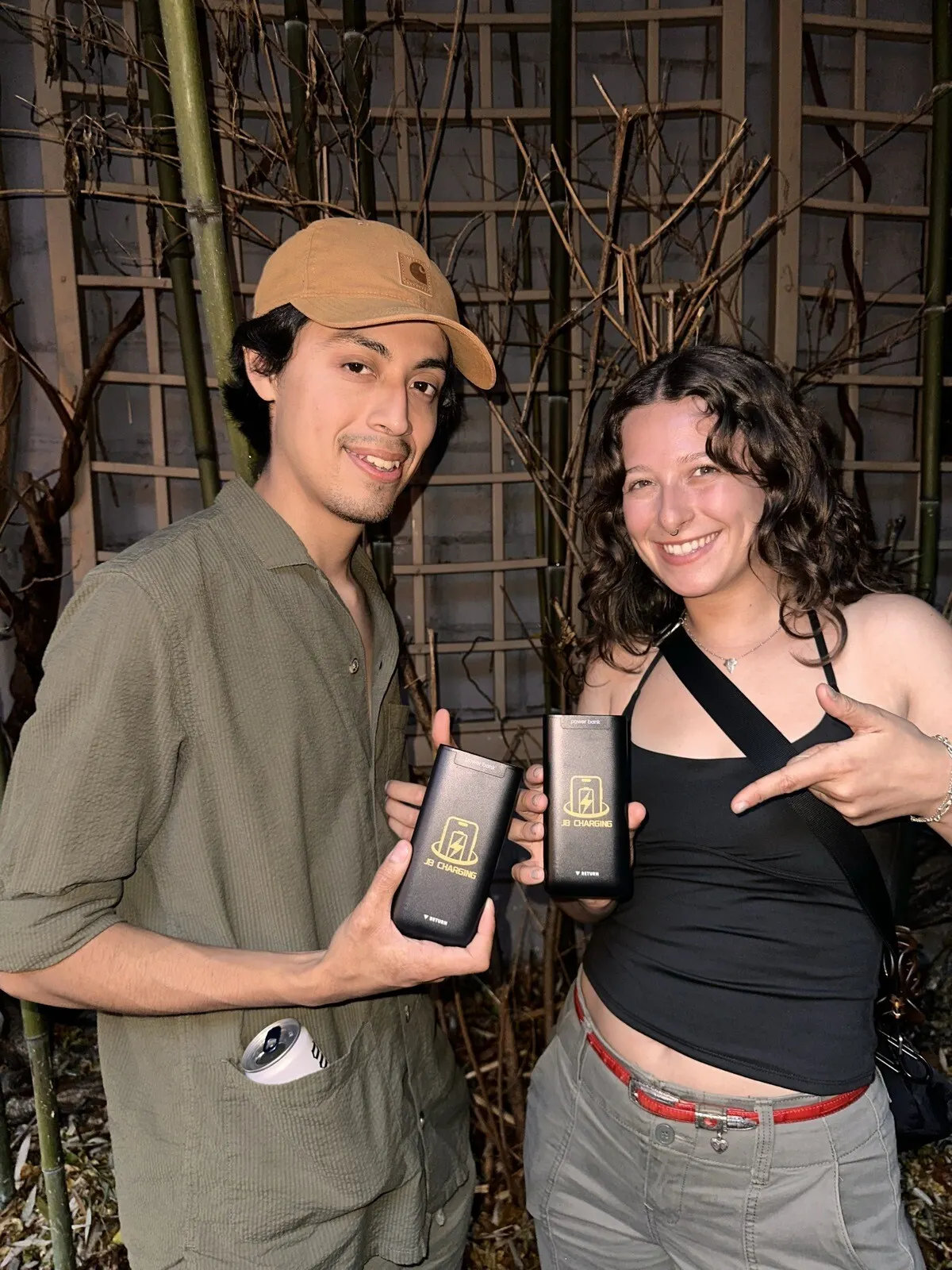
2. A fee from the organizer. Some organizers pay for charging the way they pay for portable toilets: attendees need it, and someone has to handle it. Set the fee to cover the event's costs on its own, plus any rentals you give up to a free first hour. Before you quote, check what local event-rental companies charge for a charging kiosk for a day, since the organizer will compare you to that.
The fee is your own invoice, separate from rentals. Put the deal on one page:
- dates, hours, the exact spot and the outlet
- the fee, half at booking and the rest before gates open
- what happens if weather cancels a day
- whether the organizer takes a share, and of what (rentals only, or sponsor money too)
- written approval for any screen sponsor, and the off-limits categories
- your certificate of insurance, if they want one
3. A sponsor on the screen. Beyond the price and rent button, the screen is ad space you control, and you keep 100% of the ad revenue you sell. Organizers already sell charging to sponsors. A rural water utility association listed a fall 2026 conference charging station sponsorship at $425, marked sold out when we checked in October 2026. A plastics-industry trade association lists one for its 2026 conference at $5,000 (as of October 2026). Those are organizers' prices to their sponsors, not what you'd be paid, but someone has to supply the stations. For conferences, see selling the charging sponsorship at trade shows.
The catch: the organizer usually owns sponsorship rights. Get their OK in writing before you sell your screen, and ask about category conflicts. If a wireless carrier is the presenting sponsor, don't sell your screen to its rival. You also find and sell sponsors yourself, and some events you won't sell at all. See how to sell local ads on your station screens.
Phone charging station for events business: the per-event math
The simple version: if an event pays you $600 to bring a station and the station costs about $4,000, about seven events cover it. Book a dozen events a year and you're well past it.
That's before your costs. Count them, and the fee alone takes about 14 events; rentals bring the count back down, as the table shows.
Where does $4,000 come from? A J24 Pro tower lists at $3,299 at the time of writing. Add freight, 10 spare power banks ($200 at list) and a hand truck, and you're close. Three J8 Pros hold the same 24 banks for about $3,600 at list before freight.
Now the per-event costs. Say each two-day event costs $50 in gas and parking, $200 for a helper at busy hours, and $40 to replace two banks that walk off (the renter pays a non-return fee; for this example, assume you buy the replacement). Call it $300. Assume a $10 day price, no organizer share and no sponsor.
| Assume: two-day event, $10 day price, $300 in costs | Your 80% | If the event pays you $600 | If the spot is free | If you pay a $250 booth fee |
|---|---|---|---|---|
| If nobody rents | $0 | $300 net. About 14 events cover $4,000 | You're out $300 | You're out $550 |
| If 10 people rent | $80 | $380 net. About 11 events | You're out $220 | You're out $470 |
| If 40 people rent | $320 | $620 net. About 7 events | $20 net | You're out $230 |
| If 100 people rent | $800 | $1,100 net. About 4 events | $500 net. About 8 events | $250 net. About 16 events |
Run your own: fee $___ + (rentals ___ × price $___ × 80%) − costs $___ = $___ per event. Divide your kit cost by that for your event count.
When the organizer pays you, even a weekend where almost nobody rents moves you forward, because the fee carries the event. On a free spot, rentals barely clear your costs until the 100-rental row; with a booth fee, that's the only row in the black. So a no-fee first year is an audition for next year's fee, not the plan.
Why the table stops at 100: a J24 holds 24 banks. If each goes out twice a day, a two-day event is about 100 rentals. Past that, banks on site set the limit, not attendees. That's why you fill every slot, bring spares and add a second station.
Push for a fee where the event already sells sponsorships, or where guest services says people asked to charge phones last year (ask them). Be wary of booth fees at events you've never worked. A screen sponsor adds straight to the net line, but sponsors aren't guaranteed, so don't build the plan on one.
The table leaves out your own time, a canopy if organizers won't cover you, your liability policy, vendor permits and bank wear (banks are rated for 500+ cycles, and normal wear isn't a warranty item). And keep a separate event kit: bars and events peak on the same weekends.
Where to find events, and who says yes
| Event | Who says yes | Lead with | Watch for |
|---|---|---|---|
| County and state fairs | Fair manager or vendor coordinator | A vendor spot plus a screen sponsor | Booth fees, heat, overnight security |
| Music and food festivals | Operations or vendor manager; sponsorship lead | An organizer fee, or a sponsor-paid first hour | An existing vendor; cell data on a packed field |
| Races, 5K to marathon | Race director | A sponsor-paid first hour at the finish, where families track runners by phone | A few hours, not a full day |
| Youth tournaments | Tournament director or complex manager | Rentals plus a small fee; parents are there all day | Spread-out fields: set up at check-in and concessions |
| Conferences and trade shows | Sponsorship or exhibits manager | Supplying the stations behind the charging sponsorship they already list | Electrical orders and in-house contractors |
| Weddings and private parties | Planner or host | A flat fee from the host, first hour free | Guests expect free all night; a booking, not a placement |
| Farmers and night markets | Market manager | A recurring weekly spot | Short visits mean short rentals; best where people sit, like a beer garden |
Build the calendar in the off-season, since fairs and festivals book vendors and sponsors early. Check your state's fair managers' association, local tourism calendars, race registration sites and tournament complex schedules. Favor repeat events: next year you pitch the same manager with your own numbers.
Don't sign an event until your stations are delivered, online and test-rented at home. Never promise an organizer a date that depends on a shipment.
Pitch lines for organizers, sponsors and attendees
First message to an organizer:
Hi [name], I run phone charging stations in [area]. For [event], I can set up a station at [the info tent / main stage / entrance]. Attendees tap a card or phone, take a charged power bank with them, and drop it back at any of our stations on site. I bring everything and need one standard outlet and a covered spot about three feet square. Who handles vendors and sponsors this year?
When they ask what it costs, give three options in one breath:
Three ways to do it. One: no cost to the event beyond an outlet, and attendees pay per rental. Two: $[fee] for the weekend, paid by you or a sponsor whose name runs on the screen, and every rental starts with the first hour free. Three: $[fee], and I bring a second station for [far zone] plus someone at the busy hours, with attendees paying per rental. Which fits this year?
For their team, send our festival and event page, written from the organizer's side.
To a sponsor. Start with businesses already on the event's sponsor list. They've budgeted for this event, and the organizer has already approved them.
Your name runs on the charging station screen at [event] all weekend, and everyone who rents stands at that screen while they tap. For $[amount], the first hour of every rental is free, "courtesy of [sponsor]," and I'll send you photos of your ad running.
Organizer objections, answered
"We don't have budget." Then it costs the event nothing beyond an outlet: attendees pay per rental, you bring everything, and the terms go in a short written agreement. Work year one on rentals and bring the numbers to next year's fee talk.
"People will walk off with the batteries." The event is never charged. By default, a bank that isn't back within 24 hours puts a $40 non-return fee on the renter's card. You can set the window and the fee per station.
"We already have lockers" or "a vendor." Ask when that agreement ends and offer to be the second quote. With a locker, the phone stays behind. A power bank goes to the stage with its owner.
"Lithium batteries in a crowd?" The station sits under cover on firm, level ground, its back to a solid wall or barrier (never loose tent fabric), out of walkways and exit lanes. The banks carry FCC, CE and RoHS markings. If the safety office wants specific battery test documents, ask us what's available before you promise anything. Carry your own general liability policy, since organizers often want a certificate of insurance. See insurance and COIs for operators.
"Do we need to staff it?" Not your staff. The station shows pictured steps, and renters can get help through the station, the app or their receipt. I handle anything on site, and on big days I'll have someone there at the busy hours.
Pricing an event station
Pricing is set per station, so an event station can run different prices from your route.
- Short events (a race morning, an evening concert): the default $3 per 30 minutes with a $20 daily maximum fits quick top-ups.
- All-day events (fairs, festivals, tournaments): people keep a bank for hours. Use one per-day price, or a per-30-minute rate with a low daily maximum. At $3 per 30 minutes capped at $10, a quick top-up costs $3 and an all-day renter pays $10.
- Sponsor-paid first hour: open each rental with up to 60 free minutes, and put the price after that on the sign. If an organizer wants charging completely free all weekend, ask us before you promise it.
- Camping and multi-day events: the non-return window defaults to 24 hours. A bank rented Friday at 6pm and brought back Saturday at 9pm, 27 hours later, crosses it. Decide if that's what you want, set the window, and post it.
Make pricing and screen changes before gates open, then run a test rental on your own card. And don't advertise unlimited swaps or a weekend pass: stations price by time window with a daily maximum, and billing stops when a bank goes back into a slot.
Event-day checklist
Pick a station you can move. J8 Pros (11.5 lb, 8 banks) are light enough to carry several, one per zone, on tables or $150 stands. A J24 Pro (72.8 lb) needs a hand truck and two people, but its 24 banks and 23.8-inch screen give a sponsor more to look at. A J48 Pro (130.1 lb) arrives on a pallet and needs a liftgate truck. Two stations beat one: renters can return to either.
- Power and signal. Ask for a dedicated standard outlet, not one shared with a food vendor's cooking gear (the J8 uses a 60-watt adapter; the J24 draws 160 watts and the J48 290). Cover cords that cross a walkway. Stations run on built-in 4G with Wi-Fi as backup, and a packed crowd can slow cell data, so ask about event Wi-Fi and run a test rental at your exact spot.
- Shelter. Treat the station as indoor equipment: under a tent, canopy or roofline, out of rain and afternoon sun, on firm, level ground, back to something solid, and lit after dark.
- Overnight. Ask whether the vendor area is locked and powered overnight; the station charges banks in its slots only while it has power. If either answer is no, take the station home each night (J8s make this easy) and price that labor into your fee.
- Fill every slot. At a permanent spot you'd leave room for returns. At an event, open full, because banks go out faster than they come back. Bring charged spares for empty slots, and watch each station's ready count in the portal.
- Sign it. One sign that reads over a crowd: "Phone charging," the price, and "Return here or at [other station]." Put a matching sign at the second station pointing back.
- Get on the map. Ask for "phone charging" on the site map, in the event app and in the pre-event email. Add the event as its own venue in your portal, so it shows on the renter app's map and you can judge it on its own rentals.
- Plan the last hour. At close everyone returns at once, and a full station can't take a bank back. Stop topping up with spares in the last two hours so slots open as banks come back, keep the station nearest the exit the emptiest, and ask the MC to say where banks go.
- After. Check Active Rentals for banks still out, restore your normal pricing, and move the station back to its next venue in the portal so the app map stays accurate. Note what rented when: that's your pitch for next year's fee.
Next step
Thinking about an event kit? Book a call and bring two or three events near you. We'll work through station choice, sponsor options, and the costs to plan for at each event, or you can compare the stations first. Already running stations? Email team@jbcharging.com before your first multi-day event, and we'll go over the pricing and non-return settings with you.
Examples are illustrative only, not a forecast or a typical result. What a station earns depends on the venue, placement, pricing, local demand, and how actively you run it.
Frequently Asked Questions
How much should I charge an event organizer to bring a phone charging station?
There's no standard rate. Add up what the event costs you: travel, a helper, bank wear and replacements, and your own time. Set a fee that covers those costs by itself, plus any rentals you give up if the organizer wants the first hour free. That way rentals and any sponsor are upside. Before you quote, check what event-rental companies near you charge to rent a charging kiosk for a day, because that's the number the organizer will compare you to.
How many power banks do I need for an event?
Estimate how many will be out at the same time: rentals per hour at the peak, times the hours each renter keeps a bank. Say you plan for 10 rentals an hour and people keep a bank about 3 hours. That's about 30 banks out at once, more than one J24 Pro holds, so a second station or several J8 Pros spread across zones is safer. Open every station full and bring charged spares. These are planning assumptions, not a forecast.
Do I need insurance to bring a charging station to an event?
Expect to be asked for it. Organizers often want a certificate of insurance from vendors, sometimes naming the event as additional insured. Carry your own general liability policy, and before you commit to an event, ask your agent how fast they can issue a certificate.
Can I use a charging station outdoors at a festival or fair?
Plan for shelter. Treat the station as indoor equipment and put it under a tent, canopy or roofline, out of rain and direct sun, on firm, level ground with its back to something solid, plugged into a standard outlet. Stations connect over built-in 4G with Wi-Fi as a backup. Big crowds can slow cell data, so run a test rental at your exact spot during setup.
What happens if attendees don't return the power banks?
The event is never charged. By default, if a bank isn't back within 24 hours, the renter's card is charged a $40 non-return fee, and you can set the window and the fee per station. Replacing the bank may be on you, so check the replacement coverage in your distributor agreement (power banks list at $200 for 10). For camping or multi-day events, set the window to fit the event and post it on your sign.
Can I move a station between my regular venues and events?
Yes. Pricing is set per station from your portal, so you can change it for the weekend. Add the event as its own venue so it shows on the app's station map. Afterward, move the station back and restore your normal pricing. If your route stations are busy on the same weekends as events, keep a separate event kit.

