Insurance and COIs for Phone Charging Station Operators: What Venues Will Ask For
JB Charging Team

Phone charging station insurance starts with your own general liability policy, including products-completed operations. It's what malls, casinos, hospitals and campuses ask to see before a station goes in, often with their company named as additional insured. JB Charging's policy can name the venue too, but it insures JB, not you. Below: each line of a venue's requirement sheet, the battery question, and a checklist and email to get the certificate right the first time.
That paperwork can work for you. The longest sheets come from the biggest rooms, and a correct certificate on the first try removes one more reason to say no.
This is how the paperwork works, not legal or insurance advice; coverage decisions belong with a licensed broker.
What a COI is, and why venues ask
A certificate of insurance (COI) is a one-page summary your agent issues, usually on a standard form called the ACORD 25, listing your policies, limits and dates. It describes your coverage; it isn't coverage. The form says it's "issued as a matter of information only and confers no rights upon the certificate holder" (sample ACORD 25).
Additional insured is the part with teeth. Your insurer adds the venue to your policy by endorsement, so if a guest sues the venue over something your station or your work caused, your policy can respond for the venue too. The same form warns that a line on the certificate doesn't do this; only an endorsement does. That's why risk teams ask for the endorsement pages.
Placing in many venues? Ask your broker about a blanket additional insured endorsement. It automatically gives insured status to anyone you're required by contract to add (IRMI), so your ninth venue needs a new certificate, not a policy change. Ask whether waiver of subrogation and primary and non-contributory wording (below) can be blanket too, and get each venue's requirement in writing.
Why they ask: your station is third-party lithium-ion equipment, serviced by someone who isn't on their payroll. Say a guest claims a rented bank damaged her phone and sends the bill to the mall. The mall wants to pass it to the vendor whose equipment was involved, with a policy behind that vendor. Products-completed operations is the part of general liability written for claims like that.
A neighborhood bar may only ask whether you're insured. Formal sheets tend to come from malls, casinos, hospitals, campuses and property managers.
What JB carries, and what it doesn't
JB Charging carries general liability insurance of $2 million per occurrence, and a venue can be named additional insured on JB's policy on request. Each request is underwritten on its own, not added automatically, so send the exact legal names early.
JB's policy doesn't cover you. When a venue asks "Are you insured?", they mean you. JB's 20% pays for card processing, 4G, the software and support; it doesn't buy you insurance.
| JB's certificate | Your certificate | |
|---|---|---|
| Insures | JB Charging, LLC | Your business |
| Can name the venue as additional insured | Yes, on request | Yes, by endorsement from your insurer |
| Covers you, your vehicle, your helpers | No | Depends on the policies you buy |
| How to get it | Email us the venue's sheet and exact names | Ask your agent or broker |
Some venues want both. If a sheet asks for more than general liability, send us the whole sheet before you agree to anything, and we'll tell you which lines JB's certificate can meet. Don't promise the rest on our behalf.
Phone charging station insurance to carry yourself
Describe the business plainly to a licensed commercial broker: "I own phone charging stations that rent lithium-ion power banks to the public, in bars, malls and hotels I don't own. I visit to restock and service them." Leave out the batteries or the venues and you can end up with a policy that doesn't fit the claim. Then ask two questions: Does anything in the policy exclude lithium-ion batteries, or products I rent to the public? (Get that answer in writing.) And how fast can you issue a certificate, and who do I email for one?
Then price each of these:
| Coverage | What it's for | When it matters |
|---|---|---|
| General liability, including products-completed operations | Injury or damage claims tied to your stations and your work | Before your first walk-in; every COI starts here |
| Equipment coverage, often inland marine | Your stations in other people's buildings or your car. Standard commercial property usually covers only the location named on the policy (Insureon) | Once your fleet is worth more than you'd shrug off losing |
| Commercial auto | Driving between venues with stations and banks | Ask whether your personal policy covers business use |
| Workers' compensation | Injuries to your employees | Rules vary by state; ask before you hire anyone, even part-time help |
| Umbrella or excess liability | Limits above your general liability | When a sheet asks for more than you carry |
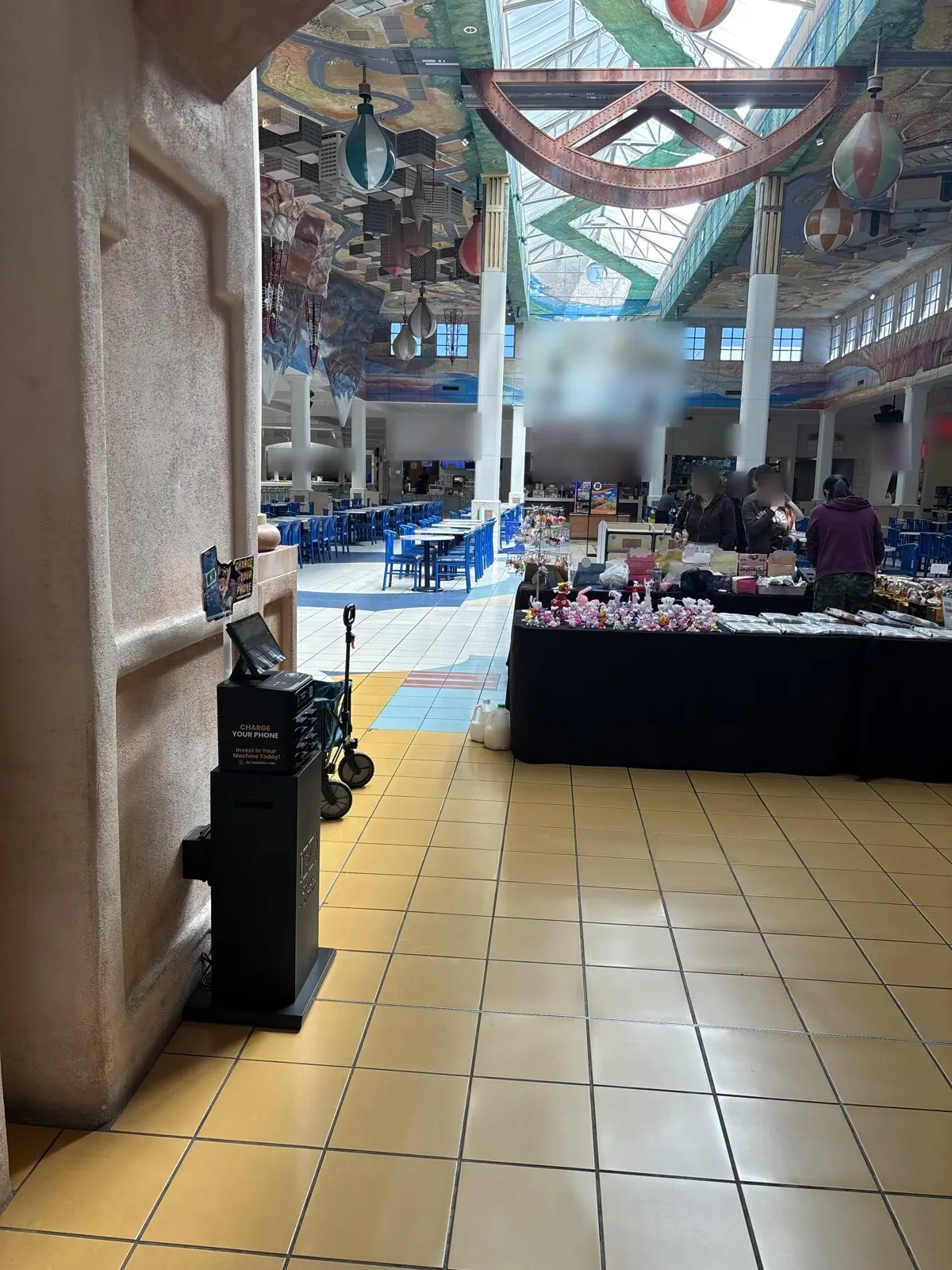
What does it cost? Insureon, an online broker, says its small-business customers pay an average of $45 a month for general liability, and 85% choose $1 million per occurrence and $2 million aggregate (Insureon). A business renting out batteries may price differently, so get a real quote.
Now count it in rentals. Say your quote is $600 a year, or $50 a month. Assume each rental brings in $3 and you keep 80%: $2.40 before any venue share. On one station, about 21 rentals a month carry the policy. Spread over 10 stations, it's about 2 rentals each.
Costs pull the other way too. Premiums are often rated on your sales, so expect the total to rise as you grow; venue shares and lost banks come out of that same $2.40; and umbrellas or new endorsements add premium, so price them before you accept a venue's terms.
Reading a requirement sheet, line by line
Picture it: a mall says yes on Tuesday, and that afternoon a two-page PDF arrives with three entity names, "$1,000,000 per occurrence / $2,000,000 aggregate", "waiver of subrogation" and "carrier rated A- VII or better". Here's each line and your next move:
| Line on the sheet | What it means | What to do |
|---|---|---|
| Additional insureds | The entities your policy must protect: often the owner LLC, the management company, sometimes a lender | Copy every name exactly, punctuation included. A missing "LLC" or last year's management company can get it rejected |
| Certificate holder | Who receives the certificate, often the management office | Copy the name and address exactly |
| Limits, e.g. "$1,000,000 per occurrence / $2,000,000 aggregate" | The most your policy pays for one incident, and in total for the policy period | Compare to yours before you say yes |
| Waiver of subrogation | Your insurer gives up the right to recover from the venue after paying a claim (IRMI) | Usually an endorsement; ask your agent |
| Primary and non-contributory | Your policy pays first, without asking the venue's insurer to share the loss (IRMI) | Also an endorsement |
| Insurer rating, e.g. "A.M. Best A- VII or better" | A published rating of your insurer's financial strength (IRMI) | Ask your agent for your carrier's rating before you send anything |
| Form numbers, e.g. "CG 20 26 or equivalent" | Standard additional-insured endorsement forms | Forward the exact line to your agent; don't decode it yourself |
| Workers' comp | Proof you cover employees | No employees? Say so in writing and ask what they accept. Government-owned venues may take a state exemption form, like New York's CE-200; private venues like malls can't accept that one |
| 30 days' notice of cancellation | Warning if your policy lapses | The standard certificate only promises notice under the policy's terms. Don't promise more than your agent can deliver |
| Description of operations | The box your agent fills in | "Placement and servicing of self-service phone charging stations at [address]" |
| Property on your equipment | Proof you insure the station yourself | See equipment coverage above |
| Business documents | Entity type, W-9, sometimes a state certificate of good standing | Keep PDFs ready |
For placement fees and who signs off at a mall, see the mall playbook.
Safety questions: say what's true
Lithium questions often arrive with the insurance request, and your insurer may ask them too.
Stick to the label. Say only what's printed on the bank: FCC, CE and RoHS. Know what those mean so you don't oversell them: FCC rules cover radio-frequency devices and interference, CE is the maker's declaration of EU conformity, and RoHS restricts hazardous substances. Don't add listings or safety ratings that aren't on the label.
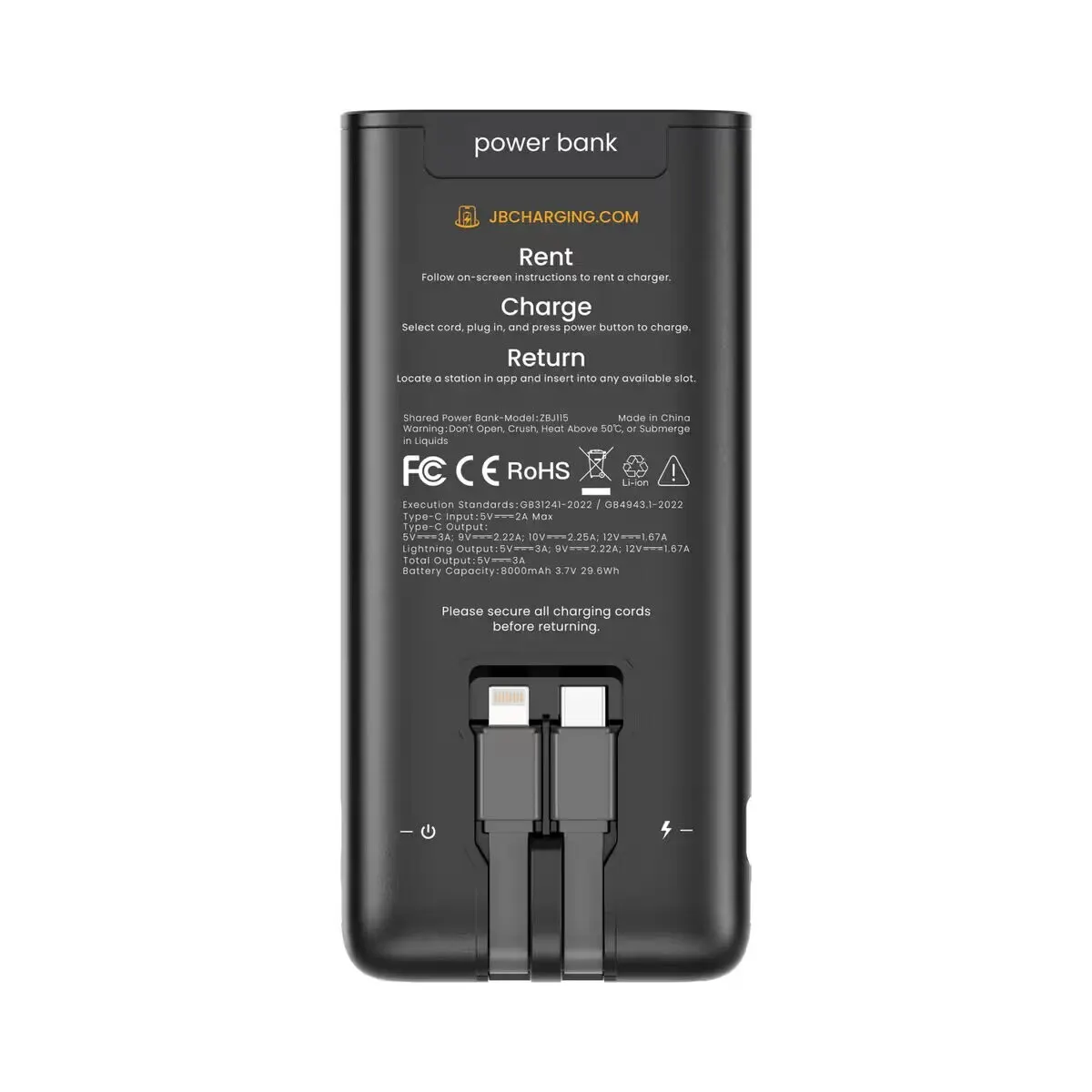
When they ask about a listing by name, don't dodge and don't stretch: "The power banks carry FCC, CE and RoHS markings, and that's what I can put in writing. Tell me which listing or test report your inspector or insurer needs, and I'll find out what's available." Then ask us before you reply. "Let me check" beats a claim you have to retract.
What you control: a standard wall outlet, never an extension cord; a spot out of exit paths; a tower with its back to a wall or pillar. Each bank charges in its own slot inside the station. The placement guide has the rest.
Your COI request checklist
Before you pitch
- Your own general liability policy is in force, with the certificate PDF on your phone, so "Are you insured?" gets a yes and an attachment (how to pitch a venue)
- Ask your agent whether your policy has a blanket additional-insured endorsement, and add one if it doesn't
- Your legal business name, entity type and W-9 are ready
At the meeting
- Ask for the insurance requirement sheet before you talk terms (it can change your costs), and who reviews certificates
- Get the exact legal names to list as additional insured, and the certificate holder's name and address
Sheet from a corporate office? See getting past "corporate has to approve".
Same day
- Send your agent the sheet, plus any indemnity or hold-harmless clause in the venue's agreement. Ask for the certificate, the endorsement pages and a price for anything new
- If the venue wants JB's certificate too, email team@jbcharging.com with the sheet, the exact names and the venue address
- Tell the venue in writing about any line you can't meet yet
Day 3
- No acceptance yet? Call the reviewer. Requests stall in property managers' inboxes
After
- Don't promise an install date until the venue accepts the certificate
- Keep one row per venue: date requested, reviewer, date accepted, certificate expiration. When your policy renews, send the new certificate to every row before the old one lapses
The email to the venue:
Subject: Insurance for the charging station at [venue name]
Hi [name],
Thanks for your time on [day]. To get our insurance right the first time, could you send me:
- Your insurance requirement sheet, or the insurance section of your vendor agreement
- The exact legal names to list as additional insured (owner, management company, any others)
- The certificate holder's name and mailing address
- Who reviews certificates, and their email
My business is [legal name], [entity type]. I carry general liability of [limits], and I'll ask my agent to add your entities by endorsement.
[Only if their sheet asks for it: I can also ask JB Charging, the network my stations run on, for a certificate naming you as additional insured, in addition to mine. Their insurer reviews each request.]
If any line doesn't fit a business my size, like workers' comp with no employees, I'll say so up front and ask what you accept instead.
Thanks, [name], [phone]
Next step
Already running JB stations and holding a venue's sheet? Email it to team@jbcharging.com with the exact names and the venue address. Still deciding whether to run stations? Book a call and ask how insurance and venue paperwork fit your first placements.
Examples are illustrative only, not a forecast or a typical result. What a station earns depends on the venue, placement, pricing, local demand, and how actively you run it.
Frequently Asked Questions
Does JB Charging's insurance cover me as an operator?
No. JB Charging carries general liability insurance of $2 million per occurrence and can name a venue as additional insured on request, but that policy insures JB Charging. It doesn't cover your business, your helpers, your vehicle or your stations, and JB's 20% doesn't pay for coverage for you. Carry your own general liability policy before you pitch venues, and ask a licensed broker what else your business needs.
How much does insurance cost for a phone charging station business?
It depends on your state, your limits and your operations, so get a quote. For reference, Insureon, an online broker, reports that its small-business customers pay an average of $45 a month for general liability, and 85% choose $1 million per occurrence and $2 million aggregate. A business renting out lithium-ion batteries may be priced differently, and umbrella limits and extra endorsements add to the cost.
What insurance do I need to run phone charging stations?
Start with general liability, including products-completed operations, because that's what venues ask to see. Ask in writing whether anything in the policy excludes lithium-ion batteries. Then ask a licensed broker about coverage for your stations in other people's buildings (often inland marine), commercial auto if you drive between venues, workers' compensation before you hire anyone, and umbrella coverage if a venue requires higher limits. This isn't legal or insurance advice.
Is a certificate of insurance the same as being covered?
No. A COI summarizes your policies, and the standard form says it confers no rights on the certificate holder. If a venue must be an additional insured, your policy needs an endorsement. That's why risk teams often ask for the endorsement pages along with the certificate.
What do I say when a venue asks about battery safety listings?
Say exactly what's printed on the power banks: FCC, CE and RoHS markings. Don't add listings or safety ratings that aren't on the label. If a venue, insurer or fire marshal asks for a specific listing or test report, write down which one and ask JB Charging what's available before you answer.
How long does it take to get a COI for a venue?
It depends on your agent and on what the venue asks for. A certificate for coverage you already carry is usually the quick part. A new endorsement, such as a waiver of subrogation, takes longer, and so does each additional-insured request on JB's policy, because each one is underwritten on its own. A blanket additional-insured endorsement can spare you a policy change for each new venue whose contract requires one. Ask for the venue's requirement sheet at the first meeting, send it out the same day, and don't promise an install date until the venue accepts the certificate.

