Phone Charging Stations vs Snack Vending Machines: What Changes
JB Charging Team

A phone charging station is a power bank vending machine whose product comes back. If you run a vending machine business, you already have the hard skills: finding locations, getting to the person who decides, and planning stops so fuel doesn't eat the margin. Still choosing what kind of vending to start? The tables below show which one fits you.
What changes is the work between sales. There's no stock to buy, haul or pull for date. In its place come two new jobs: picking venues where guests run low, and keeping every machine online.
For illustration, say five of your accounts are hotel lobbies and late-night bars. A J8 Pro from our 5-pack is about $950 per station with shipping (list price at the time of writing). If a $3 rental leaves you about $2 after our 20%, an assumed $0.30 venue share and wear on the bank, each station needs about 475 rentals to cover itself: roughly 16 months at one rental a day, closer to 4½ years at two a week. Your time, mileage, lost banks and slow weeks pull the other way, and the full math is below.
Snack machine vs charging station, side by side
| Snack or drink machine | Charging station | |
|---|---|---|
| What you sell | Items that leave for good | Time with a power bank that comes back to a free slot at any JB Charging station, maybe another of yours down the street |
| Opening inventory | A full load before day one | Banks come in the box: 8 with a J8, 24 with a J24 |
| Spoilage | Expired-product pulls and write-offs | None. Banks are rated for 500+ cycles; replacements list at $200 per 10 |
| Restock trips | Set by sell-through | None to refill. Visits rebalance banks, swap worn ones and see the venue |
| Cash | Coins and bills to count and deposit | None. Card, phone or app |
| Pricing | Per item | Per block of time, with a daily max |
| Location deal | A commission on sales | An optional venue share, out of your 80% |
| Ongoing cut | Your card and telemetry fees, if any | Our 20% covers card processing, 4G, software and support. No monthly fees |
| Machine cost (list at the time of writing, shipping as shown at checkout) | Your number, new or used | J8 Pro about $1,235 single, about $950 each in a 5-pack; J24 Pro about $3,550 |
| Warranty | Depends on the seller | 3-year limited warranty from delivery |
| Monitoring | Telemetry, if added | Built-in 4G SIM at no charge, Wi-Fi backup, portal alerts |
| Theft risk | Break-ins for cash and product | No cash box. The realistic loss is a kept bank, and the renter pays the non-return fee |
| Front of the machine | Product glass | A 10.1" to 43" screen. Ad sales are 100% yours; finding buyers is on you, and sales aren't guaranteed |
If your snack machines already run card readers and telemetry, the cash and monitoring rows are a wash for you. Every other row still changes.
Your best snack accounts may be your worst charging accounts
Snack demand follows hunger and captive time: an office floor, a warehouse break room at 2am. Charging demand follows people away from their own charger with time to kill. Sort your accounts before you buy.
| Your vending account | For charging | Why |
|---|---|---|
| Hotel lobby or front desk | Pitch first | Guests are away from their chargers, and a J8 fits the desk |
| Bar open late | Pitch first | Phones have been out all night, and the ride home depends on one |
| Mall or food court | Pitch, with a J24 tower | Long visits; expect a COI request and sometimes a placement fee |
| Bowling alley, arcade or trampoline park | Pitch | Parents wait while kids play |
| Dealership service lounge, salon or laundromat | Test one station | Long waits, smaller rooms; let 30 days decide |
| Standalone restaurant | Low priority | Most meals are too short to need a rental |
| Office, warehouse, break room or gym | Skip | People sit near their own cables, or don't stay long |
| Clinic or hospital waiting room | Skip for paid rentals | Patients and visitors expect charging there to be free |
So which fits you? Snacks, if your accounts are offices, warehouses and break rooms, or your buyers still pay cash. Charging, if you can get into bars, hotels, malls and entertainment centers and will put the work into placement and uptime. You can also run both on one route.
What carries over from your vending machine business
Location hunting. Same walk-in, same decision maker, same follow-up. Your head start is the managers who already let you plug a machine into their wall. And as with snacks, nobody hands you locations: it's a business you run, not one you buy and leave.
Commissions. You set the venue share per station in the portal. Any share comes out of your 80% and reaches the venue by monthly direct deposit with a statement, so there are no commission envelopes. Don't lead with the money, though: many venues host a station purely as a guest amenity, so lead with guests' phones. See how much revenue share to offer a venue.
Route planning. Density matters even more here, because renters can return a bank to any free slot at any JB Charging station. Banks drift between your stops, and stations close together let one loop rebalance them all.
Paperwork. Venues, malls above all, ask for a certificate of insurance. Ask your agent about adding the stations to your vending policy before your first mall pitch.
What's different on a charging route
The product comes back
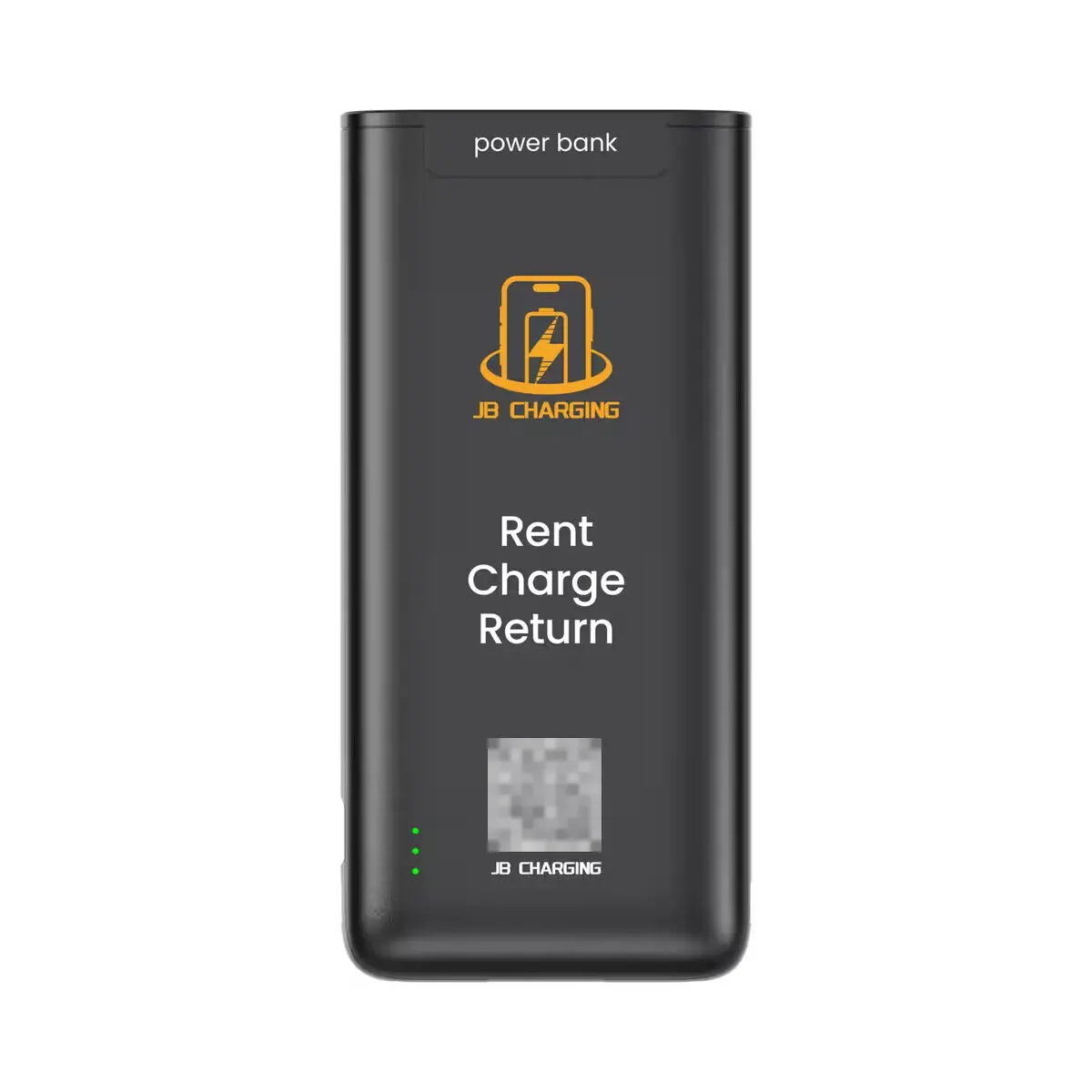
On a snack route, every sale empties a coil you refill with product you paid for. On a charging route, the slot refills when the renter brings the bank back, and the bank recharges in place. Your inventory is the pool of banks you bought, and the portal shows how many charged banks sit in each station.
The new stocking problem is distribution. A station with every slot full has nowhere to take a return, and one with no charged banks can't rent. See our stocking rules for charging stations.
You price time, not items
There's no planogram and no per-item markup. Each station has a price per 30 minutes, per hour or per day, plus a daily maximum; the default is $3 per 30 minutes with a $20 daily max. So one sale isn't one price: a renter who keeps a bank for 30 minutes pays $3, and one who keeps it all afternoon stops at the daily max.
You can add a free first period of up to 60 minutes, price in cents ($3.50 works), and charge more where demand is high, all from the portal with no visit to reprogram the machine.
No cash, ever
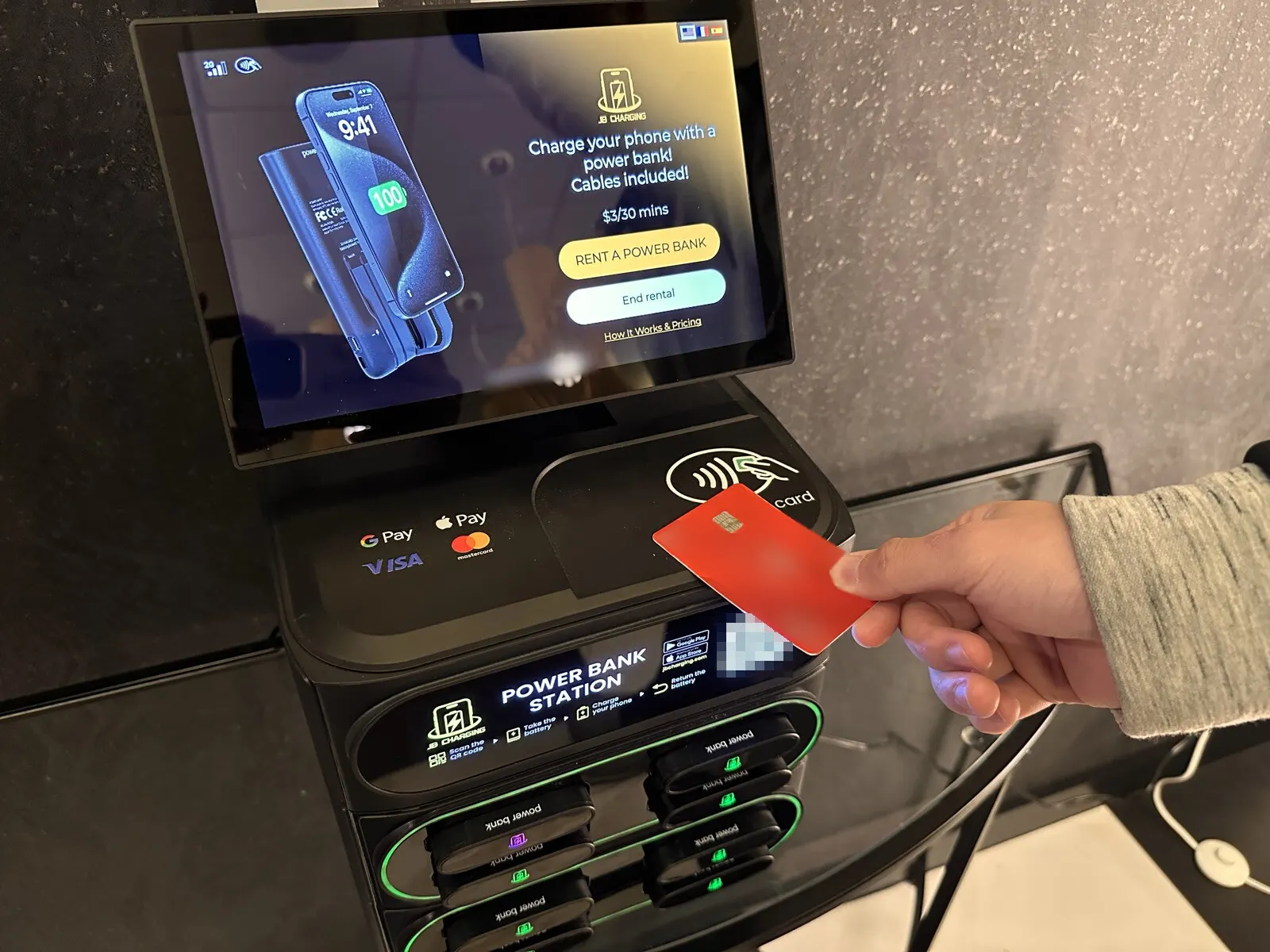
Every station we sell today has a card reader for Apple Pay, Google Pay and contactless cards, and renters can also scan the QR code and pay in the app. Most rentals start with a tap.
You give up the cash-only customer, and that's a real trade. Cash still made up about 20% of in-person payments in 2025, and five of six cash payments were for less than $25, right where a rental sits, according to the Federal Reserve's 2026 Findings from the Diary of Consumer Payment Choice. In return there's no coin mech to jam, no count and no bank run. Your share arrives by direct deposit on the 1st of each month.
No cash box also means nothing to pry open. If a renter keeps a bank past the window you set, they're charged the non-return fee you set for that station and keep the bank. The venue is never charged.
Uptime is the new restocking
A snack machine that loses its signal still sells candy. A charging station that drops offline stops renting, and in our network staying online is one of the biggest levers after venue choice.
The portal flags any station that's offline, has a card reader down, is low on or out of banks, or has gone idle, and shows revenue per venue over 7 and 30 days, so you can see which accounts earn their stop. It installs on your phone's home screen as JB Hub, so the alerts travel with you.
Picture a Tuesday loop. Before you get out of the van at a late-night bar, JB Hub shows its J8 online with all 8 slots full: weekend renters from the hotel down the street returned their banks here, so the next person bringing one back would find no empty slot. You pull two. At the hotel, down to 4, you dock them and say hello at the front desk. No cases to buy, nothing to pull for date, no coin box to count. A station showing offline would have jumped to the top of the list.
The rest is on you. Check the signal before you choose a spot (basements and concrete rooms are where 4G struggles), and fix or move any station that goes quiet. More in keeping charging stations online.
Hypothetical: what one sale leaves you
You know your snack margins better than we do, so fill in the snack column yourself. The charging column is an illustration with round numbers, not a forecast.
| Per sale (hypothetical) | Snack sale (your numbers) | Charging rental (illustration) |
|---|---|---|
| Price | Your best seller's price | $3.00 for 30 minutes (the default) |
| Product cost | What you paid per unit, delivered | $0.00, because the bank comes back |
| Shrink and wear | Your write-offs ÷ units sold | About $0.04 of bank life ($20 ÷ 500 cycles) |
| Platform and card processing | Your cashless and telemetry fees per sale, if any | $0.60, our 20% |
| Location | Your commission % × price | Say $0.30 a rental, if you agreed to pass the venue a share (many venues host for free) |
| Left before your time, travel and taxes | Price minus the four lines above | About $2.06 |
That's the $2 behind the example at the top: about 475 rentals to cover a $950 station. At one a day, that's about 16 months. At two a week, it's about 4½ years, longer than the 3-year limited warranty. At two a month, it's about 20 years: effectively never.
Costs pull the other way too: your time and mileage, insurance, a stand or mount, the occasional bank that walks off, slow weeks, taxes, and any free minutes you set. To estimate an account's rentals before you buy, see how much a phone charging kiosk can make. Our revenue calculator shows gross rentals, before our 20%, any venue share and your costs.
If a station that's online and stocked sits near two a week, treat that as a signal to test a different spot before you add machines. Results can be lower than any example here: revenue isn't guaranteed, and you may earn less than your costs or lose your investment.
Adding charging to an existing vending route
- Start with the "Pitch first" rows, then the "Pitch" rows. Leave the "Skip" rows on snacks.
- Pitch on a stop you're already making, to the manager who already knows you: "You know me from the snack machine. I'd like to add a phone charging station for your guests. They tap a card, take a charged power bank with the cables built in, and drop it back in a slot when they're done. Your staff don't have to run it. It runs off a regular outlet, and on our standard terms it costs you nothing beyond the electricity. I'd put the terms, including any share, in writing before I install. Where do guests ask staff to charge phones now?" Not every account will say yes. Each venue decides, and no location is guaranteed.
- Get it in writing first. Send the venue agreement from the portal and have it signed before install day.
- Match the machine to the room. A J8 (about 9 by 9 inches, on a 60W adapter) fits a front desk or host stand; a J24 tower suits malls and big rooms. Put it where people sit or wait, never on the bar top or in an exit path. Keep towers back to a wall, and agree with the venue on how the station is secured.
- Test at home, finish setup on site. Run one rental and return at home before your first install. On site, assign the station to the venue in the portal, set the price and any venue share to match the signed agreement, and run one more test.
- Fold it into the route. Check stations on stops you already make, and let portal alerts add the unscheduled ones.
- Give each station 30 days, then move any that aren't renting.
Next step
To see how stations would fit the accounts you already service, book a call and bring your route list. Or see the stations and current list prices.
Examples are illustrative only, not a forecast or a typical result. What a station earns depends on the venue, placement, pricing, local demand, and how actively you run it.
Frequently Asked Questions
Can I add phone charging stations to an existing vending route?
Yes. The skills carry over: finding locations, reaching the decision maker and planning stops. Start with accounts where guests linger away from home, such as hotel lobbies, bars open late, malls and entertainment centers, rather than offices or warehouses. Each venue decides whether to host, so no placement is guaranteed. A J8 sits on a counter, plugs into a standard outlet and comes online over its built-in 4G SIM.
Do phone charging stations take cash?
No. Every station we sell today has a card reader for Apple Pay, Google Pay and contactless cards, and renters can also scan the QR code and pay in the app. Operators keep 80% of rental revenue, before any venue share and their own costs, and are paid monthly, on the 1st, by direct deposit.
Do you have to restock a charging station?
There's no product to buy. Power banks recharge in their slots after each return. You visit to move banks between stations when one is full or empty, to swap worn or missing banks (replacements list at $200 per 10 at the time of writing), and to check in with the venue. The portal flags stations that are low on banks or out of them.
Can I start with just one charging station?
Yes. A single J8 Pro lists at $1,199.99, plus shipping shown at checkout (about $1,235 in total at the time of writing). Bundles lower the price per station, but they only help if you have venues for all of them. One station on your best-fit account is a fair test. Give it 30 days before you judge it.
How much commission should a charging station operator give the location?
There's no standard rate, and you don't have to offer one. You set the venue share per station in the portal, and it comes out of your 80%. Many venues host a station free as a guest amenity, and others take a share you negotiate. Agree it in writing before install.
Do phone charging stations run themselves?
No. They remove buying, hauling and date-pulling, but you still find venues, install stations, move banks between stations when one fills up or runs low, and fix or move any station that goes offline or stops renting. The portal tells you which stops need you.

